Many Florida homeowners assume that because they have a homeowners insurance policy, they are fully protected from hurricane damage. That is not always the case. Depending on the carrier and the policy, wind damage, flooding, and storm surge may be excluded or subject to entirely different deductible structures than you expect.
A standard homeowners policy covers certain perils, but Florida hurricane insurance coverage is not a standard market. After years of reform, rate increases, and carriers exiting the state, policies have become more complex. Coverage that existed under your previous policy may not exist in your current one.
The Windstorm Deductible: Florida’s Most Misunderstood Policy Feature
One of the most important and most confusing aspects of Florida hurricane insurance coverage is the windstorm deductible. Unlike your standard deductible, which is a flat dollar amount, windstorm deductibles in Florida are typically calculated as a percentage of your home’s insured value.
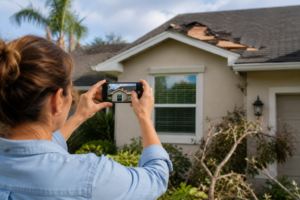
That means on a $400,000 home with a 5% windstorm deductible, you would be responsible for the first $20,000 of damage before your insurance pays anything. Many homeowners do not realize this until they are standing in front of a damaged roof after a storm.
Before hurricane season begins, pull out your declarations page and locate your wind or hurricane deductible. If you are not sure what you are looking at, that is a problem worth solving now.
Flood and Storm Surge: The Coverage Gap That Costs Homeowners the Most
Flooding is the single most common and costly consequence of a major hurricane, and it is not covered by your standard homeowners insurance policy. Flood coverage requires a separate policy, either through the National Flood Insurance Program (NFIP) or a private flood carrier.
Storm surge, which is the rapid coastal flooding caused by hurricane winds pushing ocean water inland, also falls under flood coverage, not wind coverage. This distinction has caught Florida homeowners off guard for decades. Even homes that are miles from the coast can be affected by surge during a major storm.
If you do not have a flood policy, now is the time to explore your options. NFIP policies typically have a 30-day waiting period before they take effect, which means the clock is already ticking.
ALE Coverage: What Happens if You Can’t Live in Your Home?
If a hurricane makes your home uninhabitable, your Florida hurricane insurance coverage may include Additional Living Expenses (ALE) benefits to pay for temporary housing, meals, and other costs while your home is being repaired or rebuilt. But ALE coverage has limits, both in dollar amount and in time, and those limits vary significantly from policy to policy.
Many homeowners do not discover what their ALE covers until they are displaced and already incurring costs. Understanding this coverage in advance is critical, especially in a post-hurricane market where hotel availability is scarce and temporary housing prices spike quickly.
5 Things to Do Right Now Before June 1, 2026
With hurricane season weeks away, here is a practical checklist for Florida homeowners:
1. Review your declarations page. Confirm your coverage limits, deductibles, and any exclusions. Pay close attention to the wind and hurricane deductible.
2. Verify your flood coverage. If you do not have a separate flood policy, contact your agent immediately. Remember the 30-day waiting period.
3. Document your belongings. Walk through your home with your phone and record a video inventory of your possessions. Store it in the cloud. This is critical if you ever need to file a personal property claim.
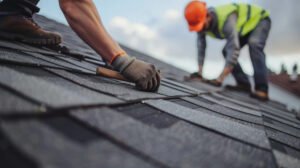
4. Check your roof’s condition and age. Florida carriers are increasingly denying claims or non-renewing policies based on roof age. An older roof can also affect your coverage terms and premiums.
5. Know who to call when something goes wrong. The claims process after a major hurricane is complex and often adversarial. Insurance companies have their own adjusters whose job is to assess and in many cases minimize payouts. Having a trusted resource in your corner before a storm hits matters.
How Black Diamond Claims Solutions Can Help You
Filing a Florida hurricane insurance coverage claim involves more than submitting paperwork. It requires documentation, negotiation, and in many cases, a fight to get what you are rightfully owed under your policy. Insurers are permitted to dispute the scope of damage, challenge contractor estimates, and delay payment. This is where Black Diamond Claims Solutions steps in.
We offer several services specifically designed to support Florida homeowners before, during, and after a hurricane claim:
ALE Coordination and Temporary Housing — If a storm displaces you from your home, we work directly with you to maximize your Additional Living Expenses benefits and secure appropriate temporary housing. We handle the coordination so you are not navigating hotel stays, rental searches, and reimbursement paperwork on your own while also dealing with a damaged home. Learn more about our ALE Services.
ALE Validation Reports — If there is a dispute over what your temporary living costs should be, our team prepares detailed ALE Validation Reports that document fair market housing costs in your area. These reports are used to support your claim and ensure your insurer is not undervaluing your displacement expenses.
Law Firm Consulting — When a claim becomes a legal dispute, we provide consulting support to law firms and attorneys working on property insurance cases. If your claim has escalated or you are working with legal counsel, our team can provide expert analysis and documentation to support your case. Learn more about our Law Firm Consulting services.
Invoice Purchasing for Contractors — If you are a contractor performing hurricane restoration work in Florida, delayed insurance payments should not delay your business. Black Diamond purchases contractor invoices so you get paid faster, without waiting on insurance carriers to settle. Learn more about Invoice Purchasing for Contractors.
Whether you are a homeowner trying to understand your Florida hurricane insurance coverage before the season starts or you are already in the middle of a claim, our team is here to support you every step of the way.
Black Diamond Funding Ventures, LLC is not a public adjuster, insurance adjuster, law firm, or claims representative. Submission of information through this website does not create a client, agency, or fiduciary relationship. We do not negotiate, adjust, or settle insurance claims. Any information provided is for general educational purposes only and is not intended as legal advice or claim adjustment services. We may recommend licensed professionals where appropriate.