Florida’s property insurance landscape is shifting again. After sweeping reforms in 2022 and 2023 that reshaped attorney fees and claim filing deadlines, the 2026 legislative session is pushing further — this time targeting how claim disputes are resolved, how insurers treat aging roofs, and whether an algorithm should be allowed to deny your claim without a human reviewing your file. These are the Florida insurance law changes 2026 that matter most for property owners.
Two bills are driving the Florida insurance law changes 2026. Each bills is being projected for an effective date of July 1st, 2026 and each one directly affects your rights the next time you file a property damage claim.
Black Diamond Claims Solutions will continue monitoring these legislative developments and provide updates should any changes, amendments, or withdrawals occur.
| Bill | What It Addresses | Effective Date |
|---|---|---|
| HB 815 / SB 808 | Roof age and insurance coverage | July 1, 2026 (Projected Effective Date) |
| HB 527 | AI use in claim denials | July 1, 2026 (Projected Effective Date) |
HB 815 / SB 808: Your Insurer Cannot Drop You for Roof Age Alone
One of the most common frustrations for Florida homeowners in recent years has been receiving a non-renewal notice citing an aging roof even when the roof is fully functional and has years of serviceable life remaining. House Bill 815 and companion Senate Bill 808 directly address this problem and represent one of the most homeowner-friendly Florida insurance law changes 2026.
Florida law already prohibited insurers from refusing to issue or renew a standard homeowner’s policy solely because the roof is less than 15 years old. The 2026 legislation extends that same protection to all residential property insurance policies, closing a loophole that some carriers were using to drop condo associations, landlords, and other residential property owners not covered under the original rule. The 2026 update to the Florida insurance law changes 2026 extends this same protection further.
New Protections for Roofs 15 Years and Older
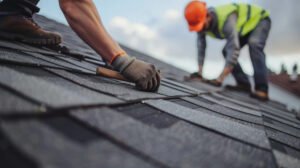
The more significant change applies to roofs that are 15 years old or older. Under the Florida insurance law changes 2026, homeowners now have the right to arrange an independent roof inspection before their insurer can require a replacement. If that inspector certifies that the roof has at least five years of useful life remaining or that a coating system can extend its life by five or more years your insurer cannot drop your policy on the basis of roof age alone.
The law also expands who qualifies as an authorized inspector, making it easier to get a credible second opinion when your insurer is pushing for a full replacement you may not actually need.
These roof protections under the Florida insurance law changes 2026 matter beyond renewal time. If your insurer argues that your roof damage was caused by wear and age rather than a covered storm event, an independent inspection showing remaining useful life gives you a much stronger position to dispute that denial.
HB 527: AI Cannot Be the Only Reason Your Claim Is Denied
As insurance companies increasingly rely on algorithms and automated systems to process claims especially during high-volume catastrophe events Florida homeowners have started asking a legitimate question: is a computer deciding whether I get paid?
House Bill 527 draws a clear line. Under one of the most closely watched Florida insurance law changes 2026, insurers may continue using artificial intelligence to assist in reviewing claims. But AI cannot serve as the sole basis for denying a claim, denying any portion of a claim, or reducing a payment.
Every denial or payment reduction must be reviewed and approved by a qualified human professional someone with the actual authority under Florida’s Insurance Code to adjust or deny claims. That person must independently review the claim file, verify any AI-generated output, and make a final decision based on their own analysis. Simply rubber-stamping an algorithm’s recommendation would not satisfy the law’s requirements.
Insurers will also be required to maintain detailed records for every AI-assisted claim decision, including the identity of the human reviewer and the documented basis for the denial or reduction. Those records are subject to review by Florida’s Office of Insurance Regulation.
The urgency behind this Florida insurance law changes 2026 provision is grounded in data. Florida’s average homeowner claim denial rate reached approximately 46.7 percent in 2024, driven heavily by Hurricane Milton losses. Consumer advocates have raised concerns that automated systems can amplify denial patterns during catastrophe events when speed takes priority over accuracy.
If this Florida insurance law changes 2026 provision is enacted as expected, homeowners whose claims have been denied will have a new avenue to challenge the decision particularly if the insurer cannot demonstrate that a qualified human actually reviewed the file.
5 Things Florida Homeowners Must Do Now About the Florida Insurance Law Changes 2026
With the Florida insurance law changes 2026 that are projected to take effect on July 1, here is what you should do right now:
1. Review your renewal notices carefully. If your insurer has flagged your roof as a reason for non-renewal, the new HB 815 protections may apply. Do not accept a full replacement demand without first getting an independent inspection.
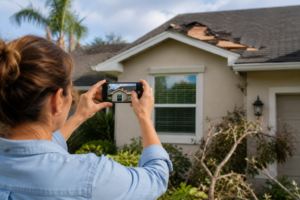
2. Document your property now. The new DOAH dispute process may reward preparation. Walk through your home and record a dated video inventory of your property and any pre-existing conditions. Store it in the cloud.
3. Ask whether AI was involved in your denial. If your claim was denied and you believe an algorithm made the call, that could become grounds for a challenge under HB 527. Ask your insurer directly and request documentation of who reviewed your file and on what basis.
4. Know your deductibles before a storm hits. Windstorm deductibles in Florida are typically calculated as a percentage of your insured value — not a flat dollar amount. On a $400,000 home with a 5% windstorm deductible, you absorb the first $20,000 of damage before insurance pays anything. Review your declarations page today.
5. Act within your filing deadlines. The new dispute tools under the Florida insurance law changes 2026 only help if you use them in time. Florida’s claim filing window is one year for initial claims and 18 months for supplemental claims. Do not wait.
How Black Diamond Claims Solutions Can Help
Whether you are preparing for hurricane season, navigating an active claim dispute, or trying to understand what the Florida insurance law changes 2026 mean for your specific policy, Black Diamond Claims Solutions is here to support you at every step.
ALE Coordination and Temporary Housing If a claim displaces you from your home, we work directly with you to maximize your Additional Living Expenses benefits and coordinate appropriate temporary housing. You should not be managing hotel searches and reimbursement paperwork while also dealing with a damaged property. Learn more about our ALE Services.
ALE Validation Reports If your insurer is disputing the value of your temporary living costs, our team prepares detailed ALE Validation Reports that document fair market housing rates in your area, giving your claim the supporting evidence it needs.
Law Firm Consulting When a property claim becomes a legal dispute, we provide consulting support to attorneys handling insurance cases in Florida. If your dispute has escalated to litigation, our team can provide expert analysis and documentation to support your case. Learn more about our Law Firm Consulting services.
Invoice Purchasing for Contractors If you are a contractor performing restoration work in Florida, delayed insurance settlements should not stall your business. Black Diamond purchases contractor invoices so you get paid faster, without waiting on carriers to close the claim. Learn more about Invoice Purchasing for Contractors.
The Florida insurance law changes 2026 give homeowners new tools to fight back against unfair denials, wrongful non-renewals, and automated claim decisions. Make sure you understand your rights — and know who to call when you need support.
Black Diamond Funding Ventures, LLC is not a public adjuster, insurance adjuster, law firm, or claims representative. Submission of information through this website does not create a client, agency, or fiduciary relationship. We do not negotiate, adjust, or settle insurance claims. Any information provided is for general educational purposes only and is not intended as legal advice or claim adjustment services. We may recommend licensed professionals where appropriate.